Which Oils to Choose for a Mediterranean Kitchen
If you’re new to Mediterranean eating, one of the first questions is always: “Which oils should I be using?”
There are so many options — olive, avocado, canola, vegetable, grapeseed — and it feels like every bottle has a different claim or health promise. It gets overwhelming fast.
In our house, we keep it simple.
We use extra-virgin olive oil and avocado oil. That’s it.
They each have their own job in the kitchen, and once you understand why, choosing the right oil becomes second nature.
The Basics: Why Oil Choice Even Matters
Healthy fats are a big part of the Mediterranean Diet. But “healthy fat” doesn’t just mean any bottle you pull off the shelf.
Some oils are naturally rich in antioxidants and protective plant compounds. Others are heavily processed and lose most of their nutritional value. Some handle high heat well. Some don’t.
Understanding a few simple terms — like smoke point and polyphenols — will help you build a kitchen that’s flavorful and heart-healthy without overthinking it.
What a Smoke Point Is (Explained the Easy Way)
The smoke point is just the temperature where an oil gets too hot and starts to break down.
When an oil hits its smoke point:
It literally starts smoking
It loses nutrients
It can taste burnt or bitter
It can produce compounds you don’t want to inhale or eat
So, oils with high smoke points are better for things like roasting, baking, and sautéing. Oils with lower smoke points do best in dressings or drizzled on after cooking.
This is why I cook with avocado oil and finish with extra-virgin olive oil.
Extra-Virgin Olive Oil vs. Regular Olive Oil
Not all olive oil is created equal.
Extra-Virgin Olive Oil (EVOO):
Cold-pressed (meaning the olives are crushed without heat or chemicals)
Retains its natural antioxidants and polyphenols
Has that rich, peppery, robust flavor
Best for drizzling, dipping, dressings, marinades, finishing dishes
Has more protective benefits for your heart and cells
Regular or “Light” Olive Oil:
Usually refined (processed with heat or solvents)
Loses most of its antioxidants
Has a lighter flavor
Higher smoke point than EVOO
Not harmful — just not as nutritious
If you want all the Mediterranean benefits, EVOO is the one to keep in your kitchen.
What Are Antioxidants (and Why Do They Matter)?
Antioxidants help protect your cells from everyday wear and tear — things like inflammation, stress, or environmental pollutants.
Free radicals are unstable molecules that can damage your cells over time.
Antioxidants help neutralize those free radicals and reduce that damage.
EVOO is loaded with antioxidants, especially polyphenols.
Polyphenols: The Real MVP of Olive Oil
Polyphenols are natural plant compounds that:
Support heart health
Reduce inflammation
Help protect cells
Add bitterness and peppery flavor to good olive oil
The more processed an oil is, the fewer polyphenols it contains.
This is why cold-pressed extra-virgin olive oil is such a powerhouse.
Why We Still Use Avocado Oil
Avocado oil is the quiet workhorse of our kitchen.
Why we love it:
Very high smoke point (so it handles heat safely)
Neutral flavor
Still full of monounsaturated fats (the same heart-healthy fat in olives)
Doesn’t conflict with flavors in baking or roasting
I use it for:
Roasted veggies
Sheet-pan dinners
Sautéing chicken
Baking
Pancakes, muffins, anything in the oven
It’s usually more affordable than a high-quality EVOO, which helps when you’re cooking daily.
Why We Skip Vegetable Oil, Canola Oil, and Similar Oils
These oils aren’t “bad” — but they’re not the best everyday choice, especially for a Mediterranean-style kitchen.
Here’s why:
They’re usually highly refined, meaning processed with heat and chemicals
Refining strips away antioxidants and flavor
Many have higher levels of polyunsaturated fats, which oxidize more easily (especially under high heat)
They don’t offer the same heart-benefit profile you get from olive or avocado oil
You’ll see these oils in packaged foods, so avoiding them in cooking helps balance things out.
How to Shop for Olive Oil
When you’re looking at olive oil labels, choose:
Extra-virgin
Cold-pressed
Stored in a dark bottle
Why the dark bottle?
Light breaks down the antioxidants and polyphenols, which means the oil loses flavor and nutritional value faster. The darker glass protects it.
Bonus points if you can find a bottle that lists:
Harvest date
Country of origin
Certification seals
Not necessary — just signs of quality.
Here are some great brands you can keep an eye out for. These are some options that you can get right at your local grocery store and don’t break the bank:
(note: I’m not affiliated with any of these companies)
Cobram Estate (this is the one we use)
The Bottom Line
In our house:
Avocado oil = cooking, baking, roasting
Extra-virgin olive oil = flavor, nutrients, drizzling
We skip most highly refined oils
It’s based on solid nutrition, but there’s still room for flexibility, budget, personal taste, and real family life.
You don’t have to overhaul everything overnight. Just switching your main cooking oils is already a big step. Which oils are you currently using?
Join my email list to get weekly Mediterranean-style recipes, practical kitchen tips, and real-life ways to make healthy eating easy.
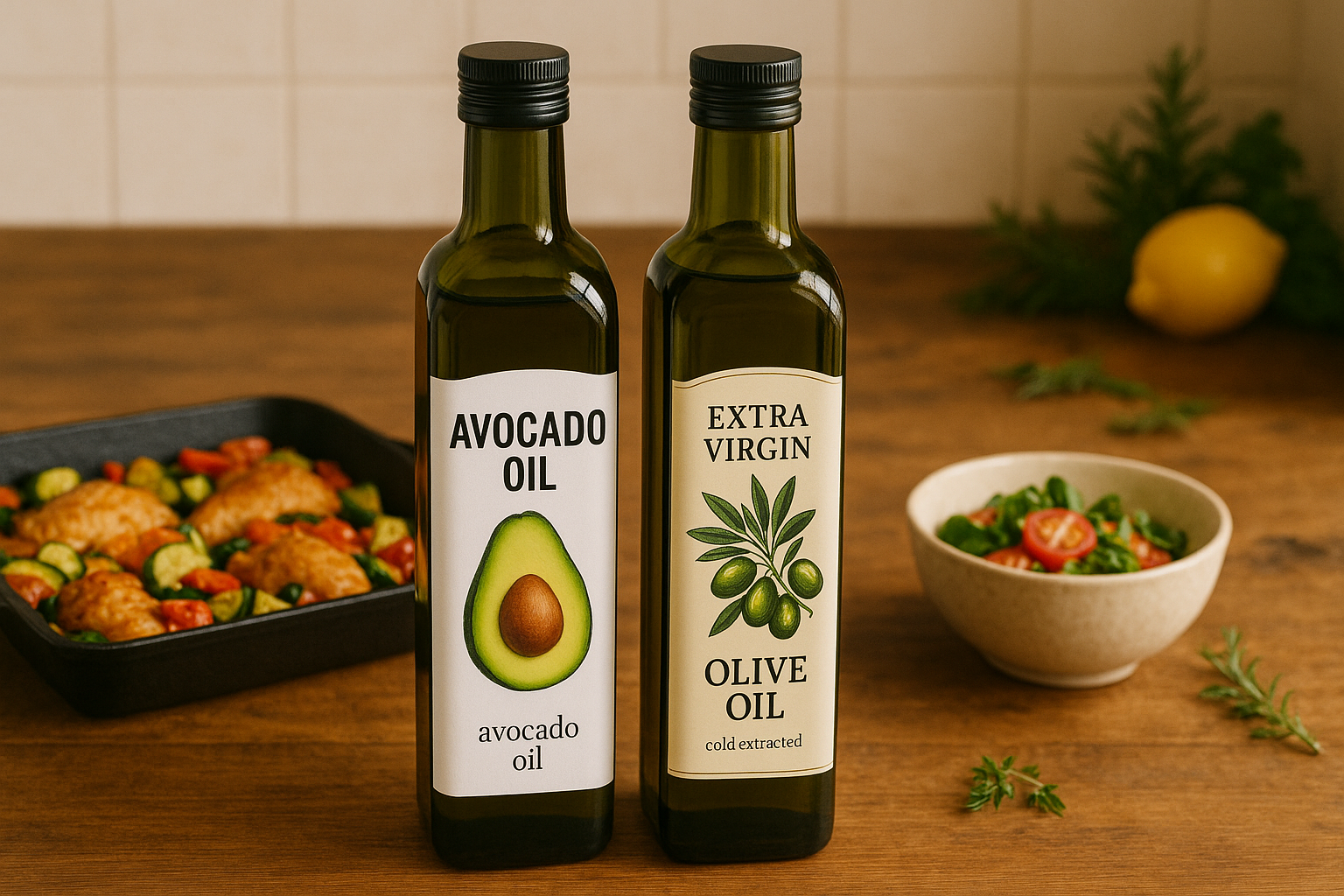
Avocado oil and olive oil — our two go-to staples for Mediterranean-ish cooking.