What a Dutch Oven Is and Why You Need One
If you’re newer to cooking or just starting to explore Mediterranean-style meals, you’ve probably noticed how often Dutch ovens show up in recipes.
For a long time, I skipped right past those recipes. Not because I didn’t want to make them, but because I didn’t own a Dutch oven and wasn’t sure if it was really worth it.
Now that I have one, I get it!
This post is a beginner-friendly, no-pressure breakdown of what a Dutch oven actually is, why it’s so useful, and why I specifically chose an enameled cast iron version.
What Is a Dutch Oven?
A Dutch oven is a heavy, thick-walled pot with a tight-fitting lid, traditionally made from cast iron.
What makes it special is how it handles heat:
It heats slowly and evenly
It retains heat extremely well
The lid traps moisture, creating a gentle, consistent cooking environment
That combination makes it ideal for low-and-slow cooking — the kind that develops deep flavor without constant babysitting.
Why Dutch Ovens Are So Popular (and Deservedly So)
Dutch ovens are often described as a “do-it-all” pot, and that’s not an exaggeration.
They can:
Go from stovetop to oven without switching cookware
Replace multiple pots and pans
Handle both high heat and long simmering
For Mediterranean-style cooking especially, this matters because so many dishes rely on slow cooking, moist heat, and building flavor over time.
What Makes a Dutch Oven Different From a Regular Pot?
Here’s where Dutch ovens stand apart:
-
One of the defining features of a Dutch oven is its weight. That heaviness isn’t a flaw — it’s the whole point.
Because the walls and base are thick cast iron, heat spreads slowly and evenly across the entire pot. Unlike thinner cookware, which can create hot spots that burn food in one area while leaving another undercooked, a Dutch oven distributes heat in a much more controlled way.
This matters especially for:
Soups and stews
Tomato-based sauces
Beans and lentils
Braised meats
With a Dutch oven, food is far less likely to scorch on the bottom, even during longer cooking times. For beginners, this is huge — the pot is more forgiving if you’re still learning heat control.
-
Cast iron is known for its ability to retain heat, and a Dutch oven takes full advantage of that.
Once the pot heats up, it stays hot — even if you lower the burner or remove it briefly from the heat. This steady temperature helps food cook gently and evenly rather than reacting to constant temperature swings.
In practical terms, this means:
Less risk of boiling too aggressively
Better simmering at lower heat
More consistent cooking from start to finish
This is especially helpful for Mediterranean-style dishes, which often rely on slow cooking rather than high heat.
-
The tight-fitting lid on a Dutch oven plays a bigger role than most people realize.
As food cooks, moisture evaporates and rises as steam. In a Dutch oven, that steam hits the lid, condenses, and falls back into the pot instead of escaping into the air. This creates a self-basting effect that keeps food tender and prevents it from drying out.
This moisture control is what makes Dutch ovens ideal for:
Braises
Stews
Long-simmered sauces
One-pot meals
For beginner cooks, this means less monitoring and fewer last-minute fixes. The pot helps protect the texture of your food while it cooks.
-
A Dutch oven isn’t just good at one thing — it’s good at a lot of things.
Because it can move seamlessly from stovetop to oven, it replaces multiple pieces of cookware. You can brown ingredients, simmer, bake, and serve all in the same pot.
Common uses include:
Soups and stews
Bread and no-knead loaves
Braised meats and vegetables
One-pot pasta dishes
Beans, grains, and legumes
For home cooks trying to keep things simple, this versatility reduces clutter, cleanup, and decision fatigue in the kitchen.
A regular stainless steel pot just doesn’t behave the same way. It heats and cools quickly, loses moisture easily, and requires more hands-on attention to prevent sticking or scorching. A Dutch oven’s weight, heat retention, and tight lid create a steadier, more forgiving cooking environment — especially for longer, slower recipes.
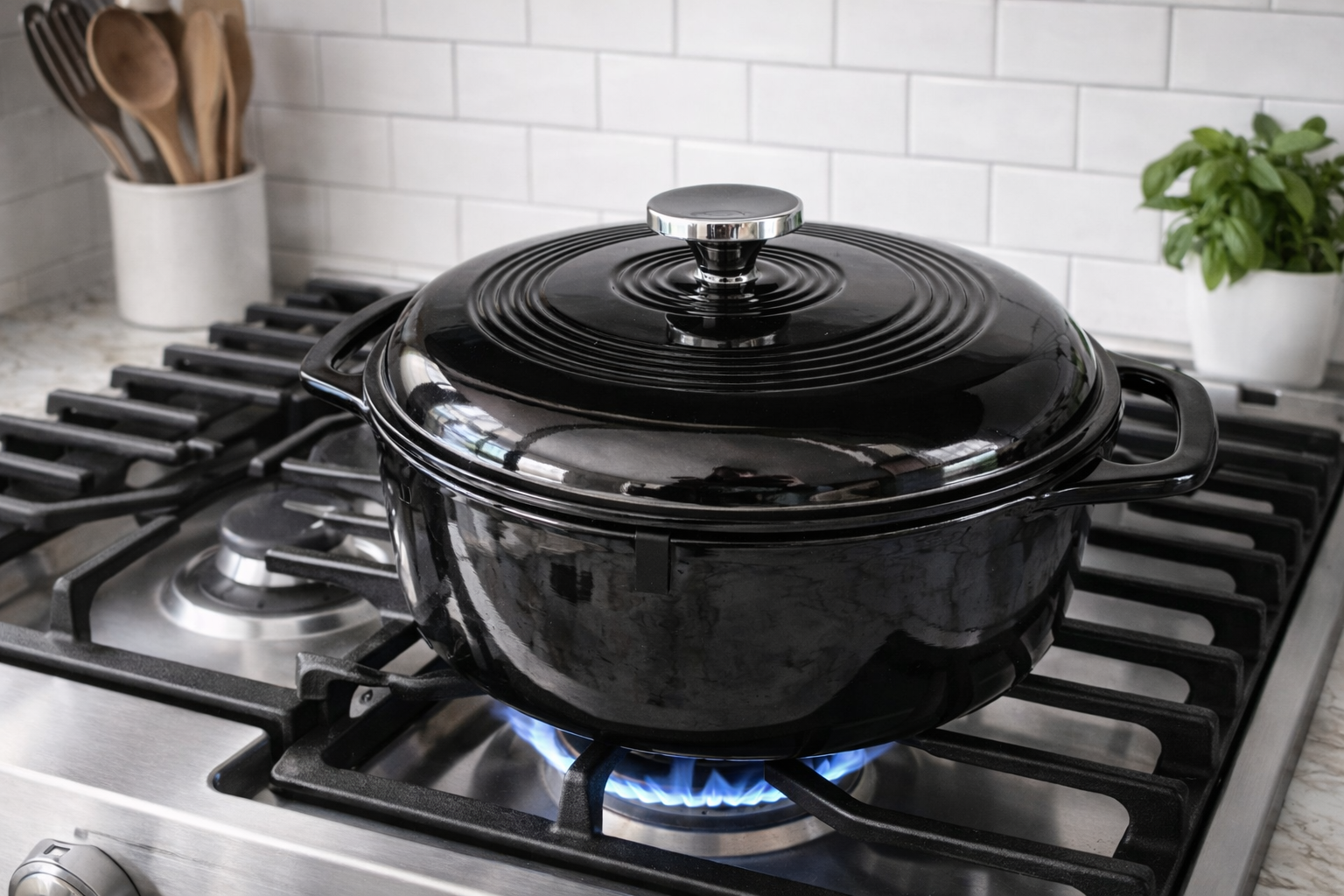
Designed to move easily from stovetop to oven, making one-pot meals simpler.
Cast Iron vs. Enameled Cast Iron (This Matters)
This is where many beginners get stuck, so let’s break it down clearly:
-
Pros:
Extremely durable
Can handle very high heat
Develops a natural nonstick surface over time
Cons:
Requires seasoning and maintenance
Can rust if not dried properly
Reacts with acidic foods (like tomatoes)
Needs careful cleaning and storage
-
Pros:
No seasoning required
Non-reactive (safe for tomato-based dishes)
Easier to clean
Lower maintenance overall
Still offers excellent heat retention
Cons:
Slightly more expensive than raw cast iron
Enamel can chip if mistreated (rare with normal use)
I wanted the benefits of cast iron without the upkeep.
Between kids, meal planning, and everyday life, I didn’t want another thing that required special care. Enameled cast iron lets me cook confidently without worrying about rust, seasoning, or acidity.
Why I Chose Lodge (and Why It’s a Smart Middle Ground)
There are Dutch ovens that cost hundreds of dollars and there are very cheap ones that don’t last.
Lodge sits comfortably in the middle:
Excellent heat retention and durability
Trusted brand with decades of experience
No unnecessary price markup
High-quality enamel and construction
It felt like the best value for someone who wants quality without paying luxury-brand prices.
What You Can Cook in a Dutch Oven
Even if you’re a beginner, a Dutch oven opens the door to a lot of meals.
Common uses include:
Soups and stews
Braised meats
One-pot pasta dishes
Bread (especially crusty loaves)
Beans and lentils
Chili
Rice and grain-based dishes
Tomato-based sauces
This versatility is a big reason Dutch ovens show up so often in Mediterranean-style cooking.
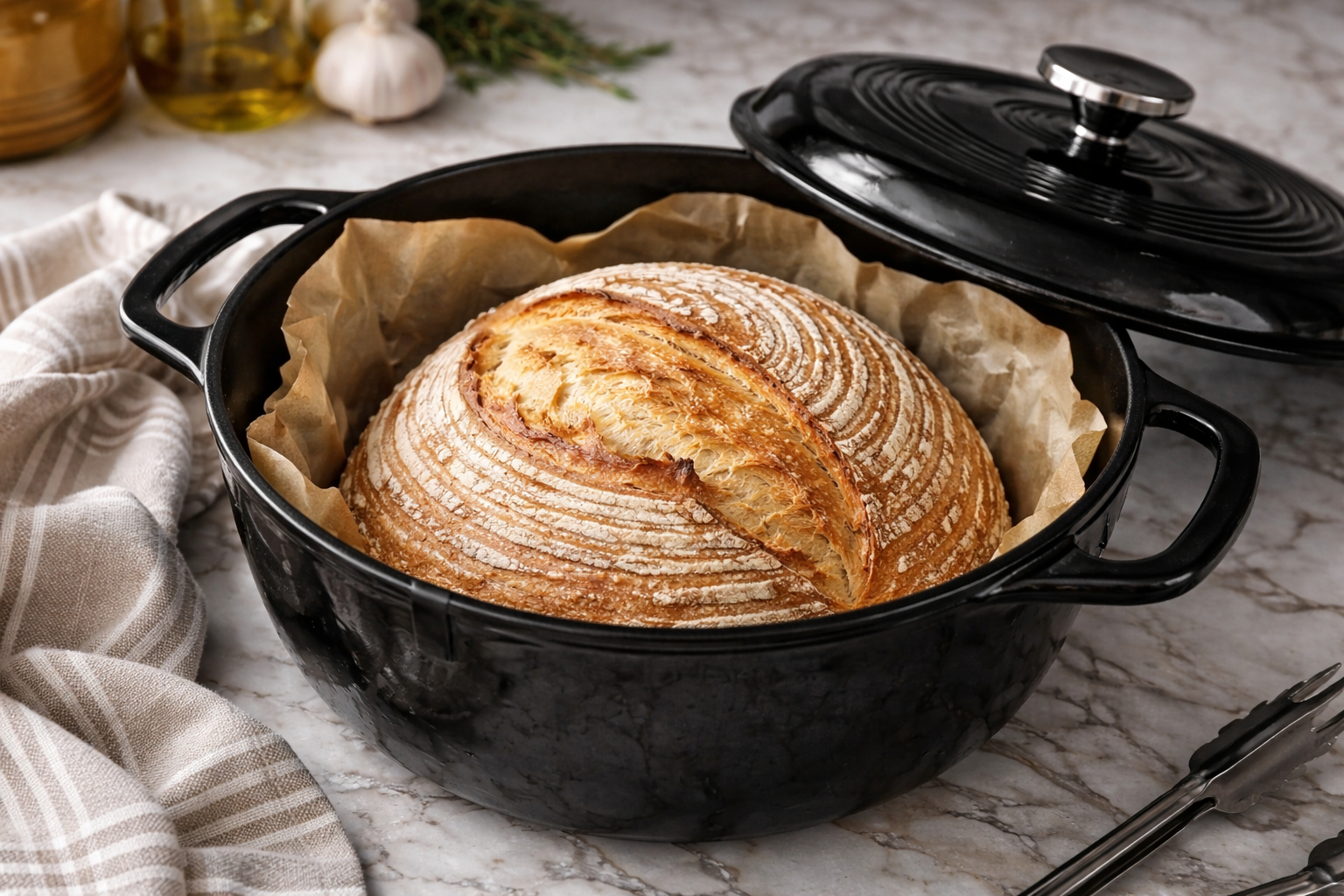
One of the many things a Dutch oven is known for — bakery-style crusty bread baked right at home.
Why Dutch Ovens Work So Well for Mediterranean Cooking
Mediterranean cooking is built around simple, whole ingredients that develop flavor over time rather than through high heat or complicated techniques. Many traditional Mediterranean dishes rely on layered flavors, where ingredients are added in stages, allowed to soften, simmer, and blend together slowly.
A Dutch oven naturally supports this style of cooking. Its ability to hold steady heat makes it ideal for slow cooking, whether that’s a pot of beans, a vegetable-forward stew, or a long-simmered sauce. The tight-fitting lid helps maintain moist heat, which keeps foods tender and prevents them from drying out as they cook.
Because the pot creates such a stable cooking environment, you don’t need to rely on constant stirring, precise timing, or advanced skills. You can focus on good ingredients and simple steps, and the Dutch oven helps carry the dish the rest of the way — which is very much in line with how Mediterranean food has traditionally been cooked for generations.
Care & Cleaning: Enameled Cast Iron Made Easy
This is another reason I chose enameled cast iron. Between kids, meal planning, and everyday life, I wanted something that fit into our routine without adding extra steps or maintenance. Enameled cast iron lets me cook confidently, clean up easily, and move on with my day — which matters a lot when time and energy are limited!
Basic care tips:
Let it cool slightly before washing
Use warm water and gentle soap
Avoid metal utensils when possible
Skip abrasive scrubbers
Dry thoroughly before storing
No seasoning. No special oils. No stress.
Is a Dutch Oven Worth It for Beginners?
If you want to cook more at home but feel overwhelmed by complicated recipes or too much cookware, a Dutch oven is one of the most useful tools you can start with. It’s especially helpful if you’re exploring Mediterranean-style meals, which often rely on simple ingredients, slow cooking, and one-pot dishes.
A Dutch oven makes it easier to prepare meals without juggling multiple pans or worrying about constant monitoring. Because it handles heat so evenly and retains moisture so well, it reduces the guesswork and cleanup that can make cooking feel like a chore.
You don’t need a fully stocked kitchen or a collection of specialty pots. One well-made Dutch oven can replace several pieces of cookware and support a wide range of meals, making it a smart and practical choice for beginners.
Final Thoughts
I waited longer than I needed to before buying a Dutch oven. Now that I have one, I see why it’s considered a kitchen staple!
It’s forgiving, versatile, and makes home cooking feel more manageable, especially when you’re learning.
If you’ve been on the fence, consider this your sign!
→ Join my email list to get weekly Mediterranean-style recipes — including Dutch oven meals I’m testing and sharing next.
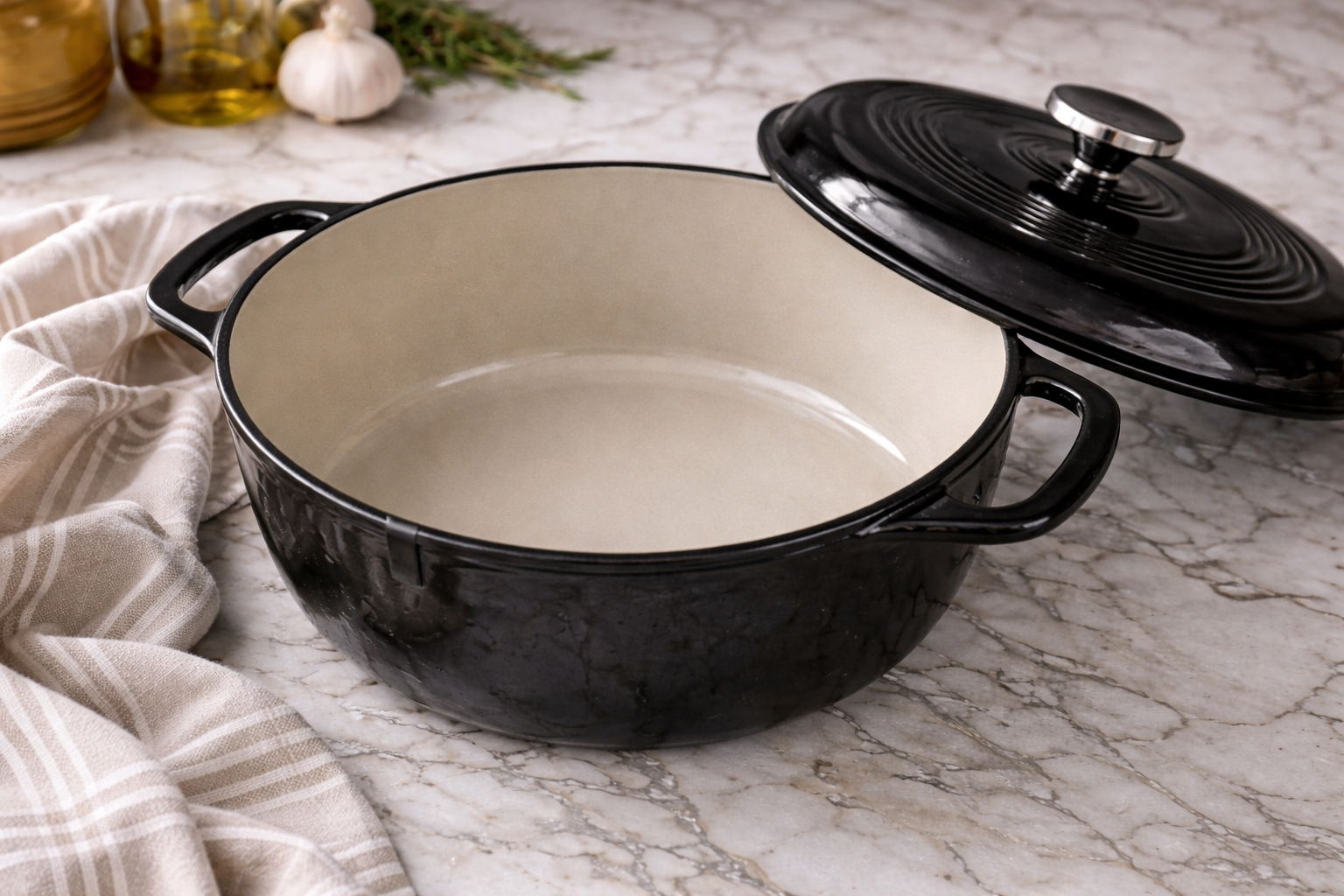
The smooth, light-colored interior of an enameled Dutch oven makes it beginner-friendly and easy to clean.